
What Is a General Trading Company and How Does the Modern Business Model Work?
If you picture a trading firm as a passive middleman pocketing a commission just for making an introduction, that view is about thirty years out of date. Today, cross-border shipping delays, sudden tariff shifts, and volatile exchange rates break fragile supply chains every week. General trading company surviving that requires more than a contact list—it demands an operator that takes actual operational ownership.
A modern general trading company acts as a full-spectrum supply chain orchestrator. Rather than simply brokering deals, these firms manage bilateral trade from end to end:
- Upstream sourcing: Securing industrial raw materials, bulk agricultural outputs, or specialized components directly from producers.
- Downstream distribution: Managing localized warehousing, compliance labeling, and last-mile retail delivery in foreign jurisdictions.
- Risk insulation: Bundling trade financing, foreign currency hedging, and complex customs clearance under a single master service agreement.
This consolidated approach absorbs headaches that usually derail mid-market manufacturers. For instance, if an ocean container sits stuck in customs at Rotterdam, a true trading partner handles the demurrage costs and local regulatory clearance on the ground, keeping your working capital from freezing.
However, businesses often confuse these players with other export models. Picking the wrong setup can leave your margins vulnerable or your supply chain stranded.
| Model | Primary Focus | Capital & Inventory Risk | Core Limitation |
|---|---|---|---|
| Commodity Broker | Facilitating pure transaction volume | Low (rarely takes title) | Zero logistics or compliance support |
| D2C Exporter | Moving branded end products overseas | High (carries retail inventory) | Limited scale; lacks upstream sourcing |
| General Trading Company | Managing end-to-end multi-sector trade | Shared to High (buys, sells, finances) | Higher overhead; unsuited for tiny, one-off orders |
In the sections ahead, we will break down how these networks operate on the ground, evaluate whether partnering with one protects your margins, and look at the exact vetting steps needed to choose the right partner for your overseas expansion.

Why Businesses Partner with General Trading Companies to Scale Global Distribution
Expanding overseas rarely fails because of a bad product; it fails under the weight of foreign customs stalls, currency swings, and bad debt. When mid-market manufacturers try to handle overseas buyers directly, they often discover that managing export credit insurance and cross-border collections drains their margins fast.
This operational bottleneck is why brands align with an established general trading company. Rather than acting as a simple broker, a trading partner purchases inventory outright or assumes title down the line. If a buyer defaults in Jakarta or port regulations shift overnight in Rotterdam, the trader absorbs that credit risk and inventory liability—not your balance sheet.
Beyond balance-sheet protection, the sheer logistics advantage cuts freight spending dramatically. Trading houses run multi-sector corridors where heavy industrial machinery, rolled textiles, and consumer electronics share container allocations and distribution hubs.
| Expansion Model | Customs & Compliance Speed | Freight Cost Basis | Financial Risk Exposure |
|---|---|---|---|
| In-House Exporting | 12–24 months (licensing, audits) | Spot-market rates | High (bad debt, stranded stock) |
| General Trading Company | Immediate (pre-existing entities) | Pre-negotiated tier-1 tariffs | Low (absorbed by trading firm) |
This scale offers immediate practical wins:
- Bypassing the compliance queue: Instead of spending two years registering local tax IDs, testing protocols, and import licenses in five separate countries, you tap into an entity that cleared those hurdles a decade ago.
- Freight consolidation: Your three pallets of spare parts ride inside consolidated containers at tier-one contract pricing, avoiding brutal LCL (less-than-container-load) spot rates.
Keep in mind, this route comes with a real trade-off: you surrender direct customer touchpoints and hand over a slice of your gross margin. If you manufacture an ultra-niche, highly configured product that demands weeks of bespoke engineering support for each client, hand-holding an agent in-house makes sense. But for companies with proven, volume-ready goods needing reliable shelf space and docks across four continents by next quarter, trading houses offer the safest shortcut available.
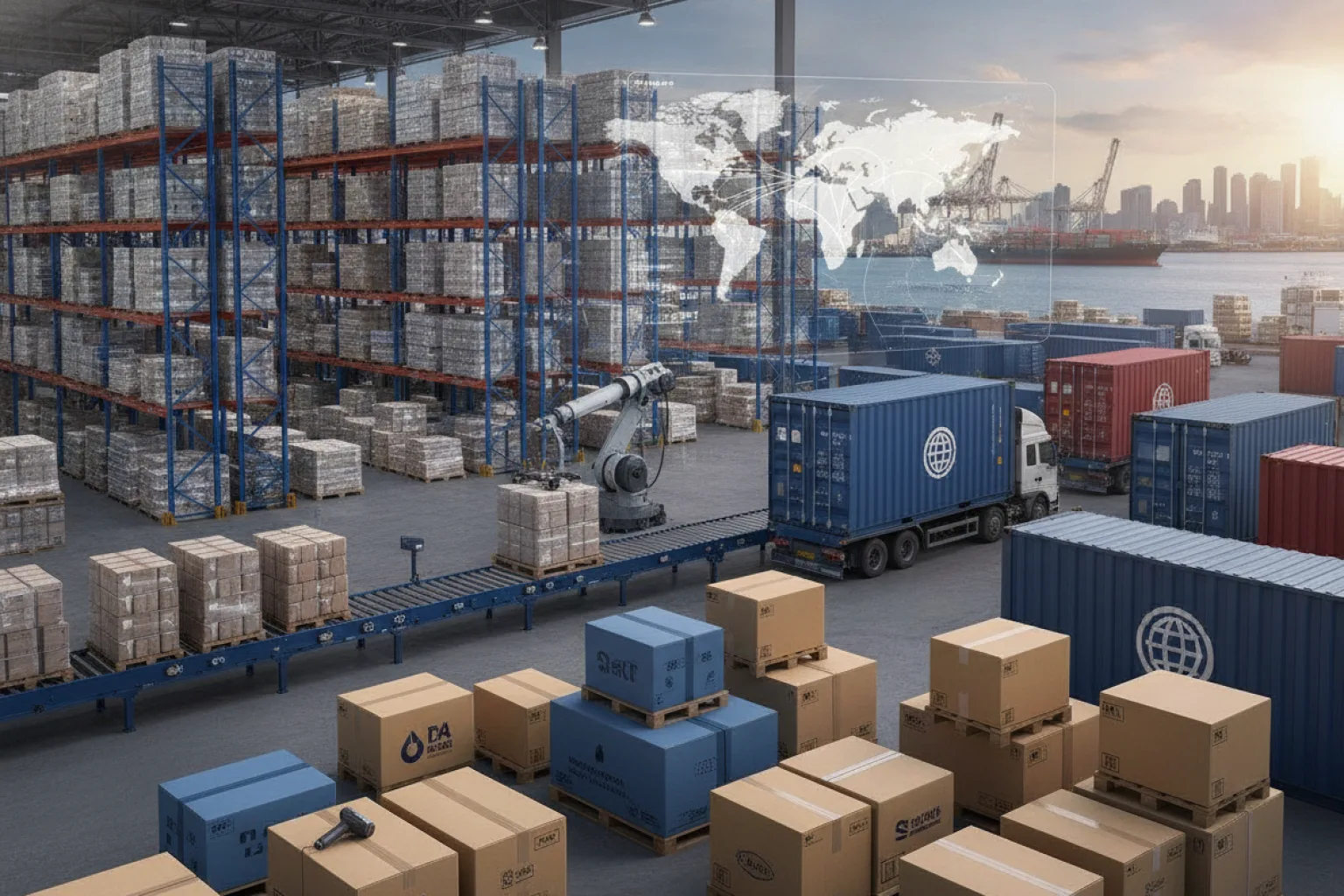
Real-World Case Studies: How General Trading Companies Drive Cross-Border Success
To understand how a general trading company creates value, look past the trade desk and look at logistics on the ground. These organizations don’t just broker transactions; they absorb systemic risk when cross-border supply chains fracture.
The Upstream Play: Japan’s Sogo Shosha
Consider giants like Mitsubishi or Itochu. Their blueprint relies on owning the full value chain. Rather than simply buying grain or rare earths on the spot market, an integrated trading house invests directly in the port terminals, processing plants, and domestic distribution fleets. If an agricultural export terminal in South America suffers localized labor bottlenecks, the sogo shosha diverts maritime vessels to affiliated regional docks and taps secondary storage silos, protecting downstream retail supply chains in Asia from stockouts.
Mid-Market Agility: Scaling Boutique FMCG
Smaller brands face an entirely different hurdle: speed to shelf. A regional organic food producer rarely possesses the regulatory muscle to clear customs simultaneously in Hamburg, Dubai, and Singapore.
In a recent deployment, an independent food exporter partnered with a specialized trading house to enter those three regions in under a year. Instead of hiring three fragmented import agencies, the exporter used the partner’s pre-cleared customs channels and shared container freight.
| Metric | Direct Exporter Route | Trading House Integration | Real-World Impact |
|---|---|---|---|
| Landed Cost | Baseline | 12% to 18% lower | Combined LCL cargo into bulk FCL |
| Lead Times | Volatile (60–90 days) | Predictable (35–42 days) | Priority carrier allocations |
| Inventory Turnover | 3.2x annually | 5.8x annually | Consignment stock at port hubs |
Halting Industrial Line Down-Time
During recent Suez and Panama transit bottlenecks, a heavy machinery assembly plant in the Midwest faced an indefinite shutdown over single-source hydraulic valves.
A nimble general trading company resolved this by shifting away from standard door-to-door ocean freight. They engaged pre-qualified secondary manufacturers across three neutral jurisdictions, secured multimodal rail-and-air routing, and absorbed the temporary tariff variance under an existing master services agreement. The plant avoided an estimated $140,000 daily line-stoppage penalty.
A quick word of caution: hand over operations only if the trader takes legal title to goods and accepts genuine inventory risk. If they operate merely as an unbonded intermediary, you retain the customs liability without getting any supply chain resilience in return.

Critical Mistakes to Avoid When Contracting with a General Trading Company
Even an experienced procurement team can trip up when taking a product line cross-border. Partnering with a general trading company opens up instant distribution networks, but sloppy contracting will quickly erode your margins. Here are the missteps I see most often—and how to sidestep them.
Muddling Your Incoterms
Never treat shipping terms as boilerplate text. Assuming your trading partner handles terminal fees just because a contract says “CIF” is an expensive mistake. Under CIF, risk passes the moment cargo clears the ship’s rail at the departure port, leaving you on the hook for destination demurrage, customs clearance, and import VAT.
If you want predictable landing costs, push for clear terms:
| Incoterm | Who Pays Freight & Insurance? | Transfer of Risk | Best Used When… |
|---|---|---|---|
| FOB | Buyer | Origin port (onboard vessel) | You have existing bulk cargo accounts |
| CIF | Seller | Origin port (ocean transit covered) | You want hands-off deep-sea transit |
| DDP | Seller | Destination facility | You need total landed-cost certainty |
Signing Blank Checks on Quality Control
Do not sign a Master Services Agreement (MSA) without explicit pre-shipment inspection clauses. If your trading firm balks at allowing third-party inspectors—like an independent bureau testing batch samples at the factory floor—walk away. Your agreement must clearly state who covers rework costs, transit insurance claims, and reverse logistics for non-conforming goods.
Overlooking Localized IP Protection
A trademark registered in your home country carries zero weight in emerging markets. Shady intermediaries exploit this daily by filing your brand locally before you can. Ensure your contract obligates the trading house to register your trademarks solely in your legal entity’s name, backed by explicit anti-piracy covenants.
Handing Out Exclusivity Too Cheaply
Giving an intermediary exclusive territory rights in fast-moving consumer sectors feels like a great incentive, but it often backfires. If their sales stall, your brand sits hostage. Unless a partner commits to strict, quarterly minimum purchasing volumes with clear penalty break-clauses, stick to a non-exclusive, multi-distributor framework to keep momentum on your side.

Compliance, Due Diligence, and Quality Control Standards in Cross-Border Trade
Moving goods across borders sounds straightforward until a forty-foot container gets impounded over a two-digit tariff discrepancy. A reliable general trading company earns its keep precisely here: absorbing the regulatory shocks so buyers and manufacturers don’t have to.
Quality assurance in international trade cannot rely on trust alone. We lean on strict verification frameworks before a single pallet moves. That starts with auditing factories for baseline ISO 9001 certifications to confirm process control. More importantly, it requires physical Pre-Shipment Inspections (PSI) conducted on-site by accredited third parties like SGS or Bureau Veritas. Inspectors pull random samples using acceptable quality limit (AQL) standards, checking everything from carton drop-tests to barcode legibility. If a batch fails PSI at the factory gate, renegotiating is simple; once it hits the open ocean, you have zero leverage.
Navigating the border itself demands technical precision:
- Tariff Precision: Misclassifying an 8-digit Harmonized System (HS) code can trigger retroactive duties or fraud flags.
- Security Alignment: Operations must reflect the World Customs Organization (WCO) SAFE Framework, expediting clearance via trusted-trader protocols.
- ESG Transparency: Modern contracts require mapping tier-1 and tier-2 suppliers to verify fair labor practices and clean raw material sourcing.
Financial risk requires just as much scrutiny. Relying on open accounts with unfamiliar cross-border entities is asking for trouble, while pure cash-in-advance alienates buyers.
| Settlement Tool | Best For | Risk Profile |
|---|---|---|
| Confirmed Irrevocable LC | High-value, new supplier partnerships | Low: Payment guaranteed by top-tier issuing and confirming banks upon exact document match |
| Documentary Collections (DP/DA) | Established accounts with predictable lanes | Medium: Exporter retains title until draft is paid, but freight risk remains |
An experienced general trading company uses confirmed, irrevocable Letters of Credit (LCs) backed by prime international banks. If the bill of lading, inspection certificate, and packing list do not match the credit terms down to the comma, funds do not move. It is rigid, but in cross-border trade, rigidity protects your bottom line.

How to Choose the Right General Trading Company for Your International Growth Strategy
Picking the right partner comes down to finding a balance between where you want to sell and what you actually ship. If you produce temperature-sensitive pharmaceuticals or heavy industrial valves, an agile, boutique trader with strict cold-chain networks or technical sales teams beats a massive conglomerate every time. But if your goal is rapid consumer-goods placement across twenty emerging markets, broad regional distribution infrastructure matters far more than niche engineering know-how.
| Model | Best Suited For | The Trade-off |
|---|---|---|
| Specialized Trading House | Complex, regulated, or technical goods | Narrower geographic reach |
| Diversified Global Partner | High-volume FMCG and standard commodities | Less hands-on product expertise |
Once the operational model fits, look directly at their balance sheet. Many cross-border deals collapse simply because an intermediary runs out of working capital while inventory sits at sea. Ask for audited statements, verify their credit lines, and confirm which tier-one banks back their letters of credit. If a partner cannot absorb a thirty-day customs delay without sweating cash flow, your freight will eventually get stranded.
Before signing, lock down real operational metrics instead of vague promises:
- Clear SLA thresholds: Define live GPS tracking checkpoints, local business-hour support windows, and a neutral legal seat (such as Singapore or London) for arbitration.
- A structured onboarding trial: Never hand over your entire export pipeline on day one. Run two or three low-volume pilot shipments through their primary trade lanes first.
Use these test runs to see how fast their local brokers clear harbor hurdles and whether their receiving warehouses report damages accurately. A dependable general trading company welcomes these small initial tests; anyone demanding an exclusive, high-volume contract before proving they can clear your freight through port customs is a partner to avoid.

FAQS
What does a general trading company actually do?
Think of a general trading company as the commercial buffer between you and an unfamiliar foreign market. Rather than acting as a simple broker who introduces two parties and walks away, they buy, sell, store, and transport goods across multiple industries.
On a given Tuesday, they might manage export documentation for a bulk shipment of food ingredients, negotiate container space with ocean carriers, and clear customs for industrial equipment. They handle the operational friction—currency conversions, localized compliance, and cross-border logistics—so manufacturers don’t have to build international trade departments from scratch.
What are the benefits of using one for import and export?
The biggest advantage comes down to risk absorption and local access. Entering a market like Japan, Germany, or the UAE without local infrastructure is expensive. A trading firm already has the warehouse space, established buyer networks, and boots on the ground to inspect factories before you send a wire transfer.
| Factor | Working with a Trading Company | Going Direct to Source / Buyer |
|---|---|---|
| Risk profile | Lower (they absorb credit and logistics risk) | Higher (you carry shipping loss and fraud risk) |
| Profit margin | Slightly lower (intermediary takes a cut) | Higher potential margins per unit |
| Speed to market | Fast (established distribution channels) | Slow (months of vetting and legal setup) |
That said, if you sell a highly technical, custom-engineered product that requires intense after-sales engineering support, a trading firm might dilute your customer feedback loop. They work best for finished goods, commodities, and standardized products.
How do I choose a reliable partner?
Don’t just look at the size of their balance sheet. Look at their real presence where your cargo lands.
- Audit their local licenses: Ensure they hold actual import/export quotas and customs clearances in your target country, not just an agent’s number.
- Inspect their dispute history: Ask how they handled a bad port delay or damaged cargo run during the last shipping crunch. Good traders have clear salvage and insurance protocols.
- Watch their focus: Be cautious of firms claiming to trade everything under the sun with a team of three people. Reliable partners have dedicated desks for specific product categories.
Conclusion
Finding reliable cross-border buyers or suppliers usually comes down to one question: do you spend months building overseas logistics networks from scratch, or do you work through an established partner?
For mid-sized businesses trying to scale without taking on unhedged currency risk, a seasoned general trading company acts less like an intermediary and more like an operational buffer. They absorb the headaches of customs clearance, trade finance, and local market compliance.
Still, outsourcing your trade desk isn’t right for every product line. If you produce highly engineered, made-to-order industrial components where margins depend on direct technical consultation, giving up control to an external trader can backfire. But for standard commercial goods, food staples, and fast-moving retail stock, the math clearly favors a trading partner.
| Strategy | Speed to Market | Operational Overhead | Regulatory Exposure |
|---|---|---|---|
| Direct Exporting | 6–18 months | High (in-house compliance) | Full liability on the producer |
| General Trading Company | Weeks | Low (shared infrastructure) | Handled by the trading firm |
Before signing an exclusive distribution agreement, watch out for these two operational traps:
- Inventory grey areas: Always clarify who covers demurrage fees at congested ports. If a container sits at customs for two weeks, those bills pile up fast.
- Margin compression on volatile goods: Tie your pricing structures to transparent benchmark indices (like ICIS for plastics or Platts for metals) rather than rigid annual contracts.
The sweet spot lies in treating a general trading company as a bridgehead. Let them test local demand, build distributor trust, and stabilize shipments in secondary markets. Once volumes justify hiring your own regional teams, you can decide whether to bring that specific corridor in-house or keep running it through the partner who built it.
Visit our page Contact